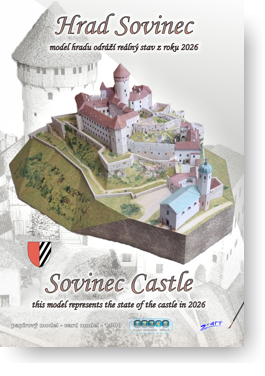
History and architecture of Sovinec Castle
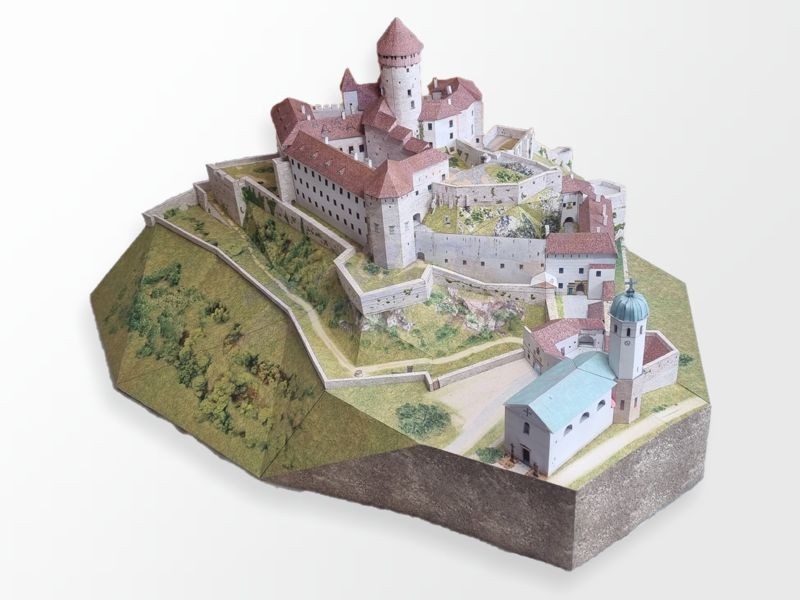
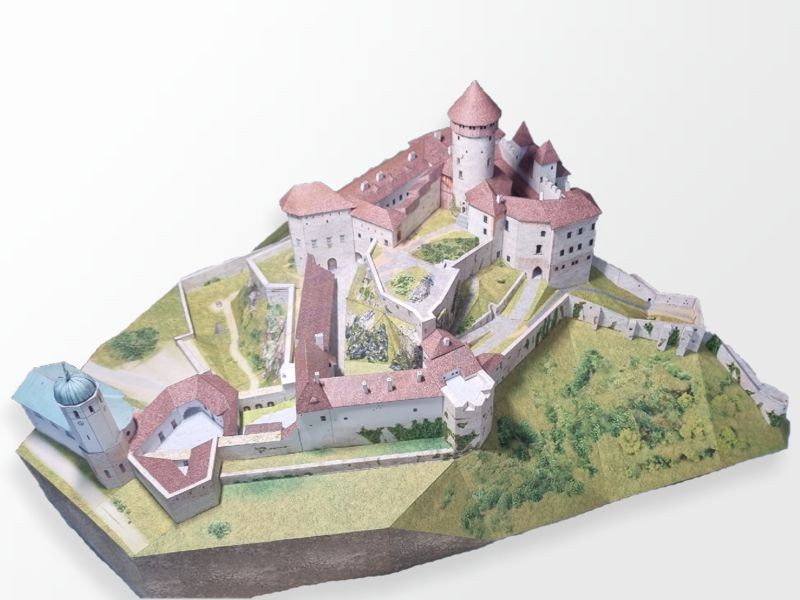
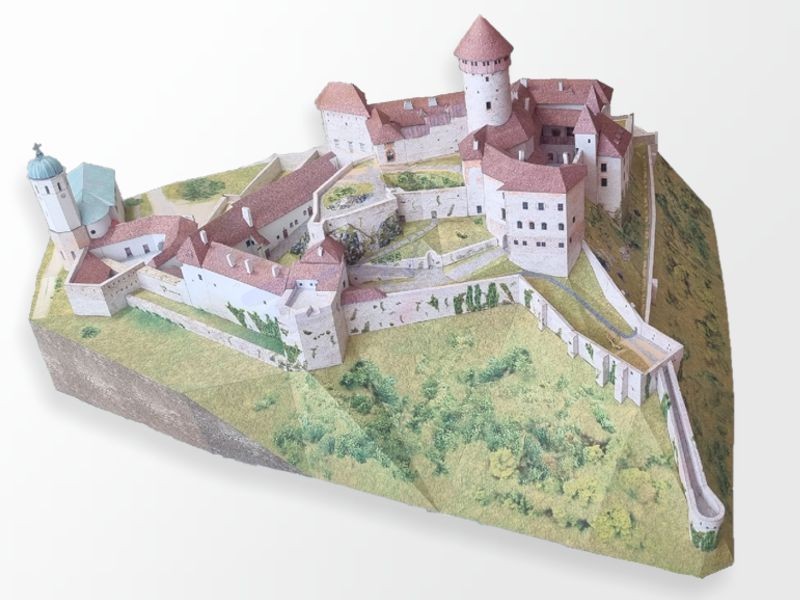
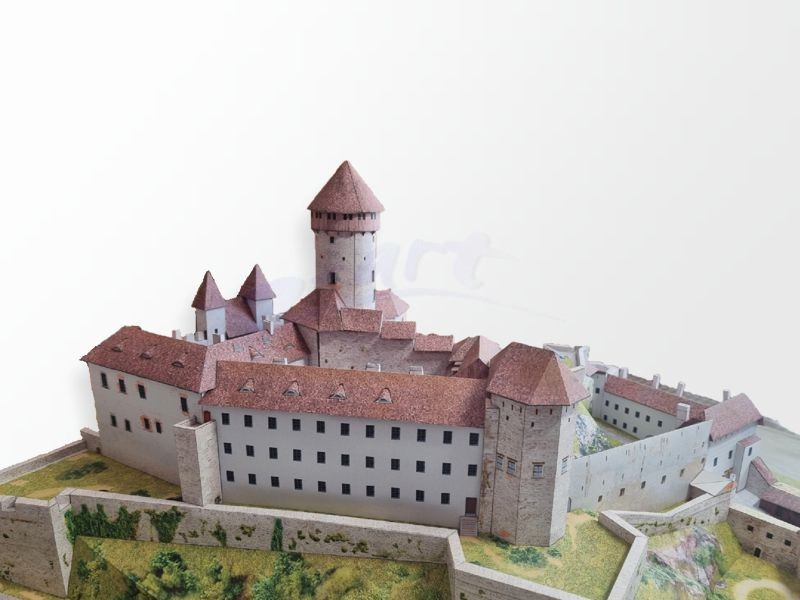
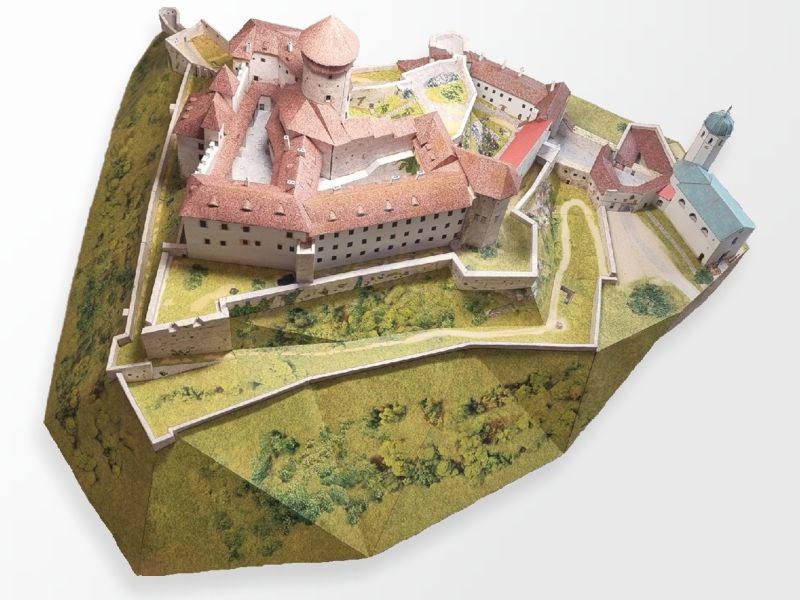
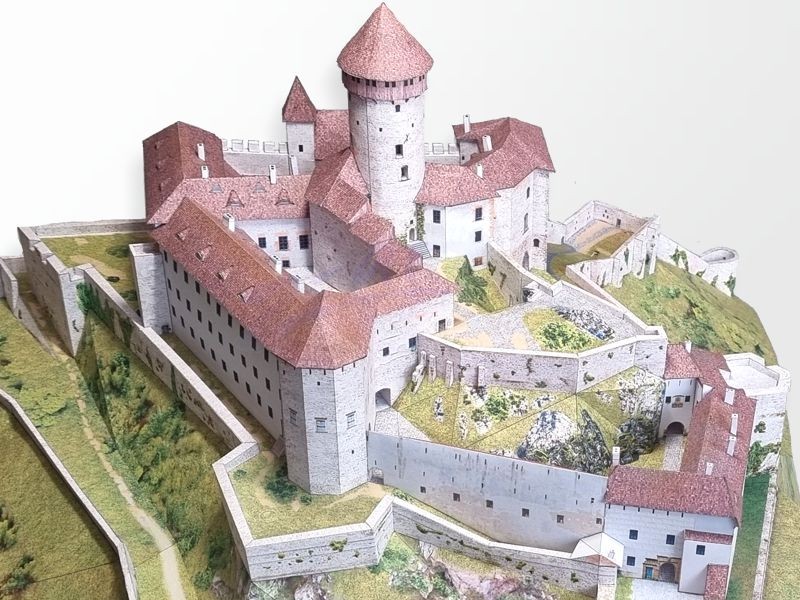
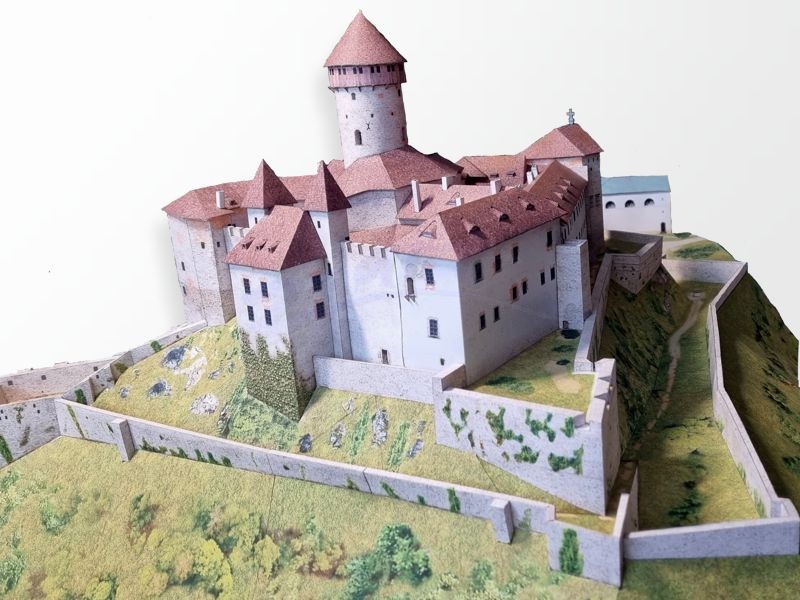
Sovinec Castle is located in the Czech Republic, on the southwestern edge of the Nízký Jeseník plateau, 14 kilometers south of Rýmařov. Our model will guide you not only through this unique landmark, but also through its history.
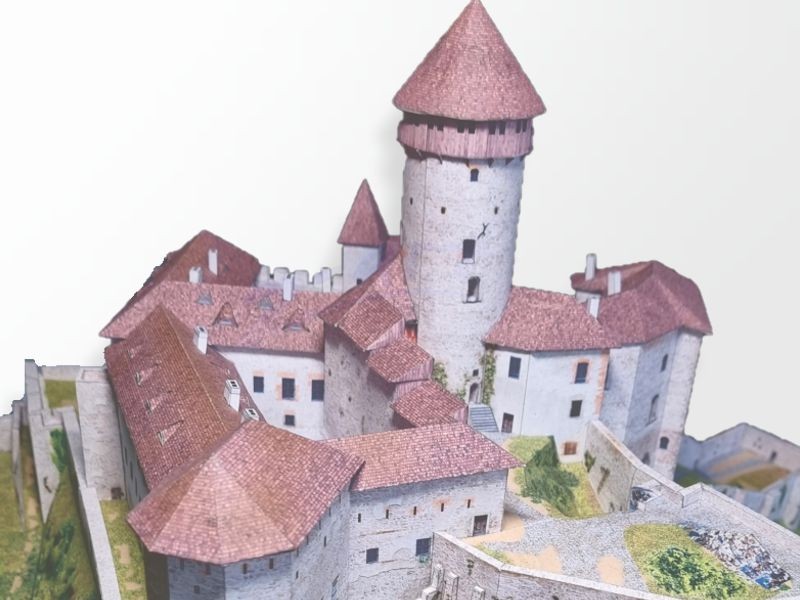
The story of Sovinec Castle begins in 1329–1332, when it was founded by the brothers Pavel and Vok of the Moravian Hrutovic family. At that time, it was a small fortress, consisting of a cylindrical defensive tower (bergfrit) and a palace located east of it. These buildings were surrounded by a perimeter wall approximately 2.3 meters wide.
Shortly before 1490, the castle was purchased by Jan Pňovský of Sovinec, who carried out late-Gothic renovations there. The so-called South Palace was built, and a short east wing was added to it, connecting the South Palace with the upper castle. A passageway (now the 6th gate) was created in this wing. Under the lords of Boskovice (who acquired the castle around 1540), a Renaissance northern palace was added, and both palaces were connected by wooden galleries. To strengthen the defenses, the northern side of what is now the third courtyard was fortified. At the same time, the burgrave’s residence was built.
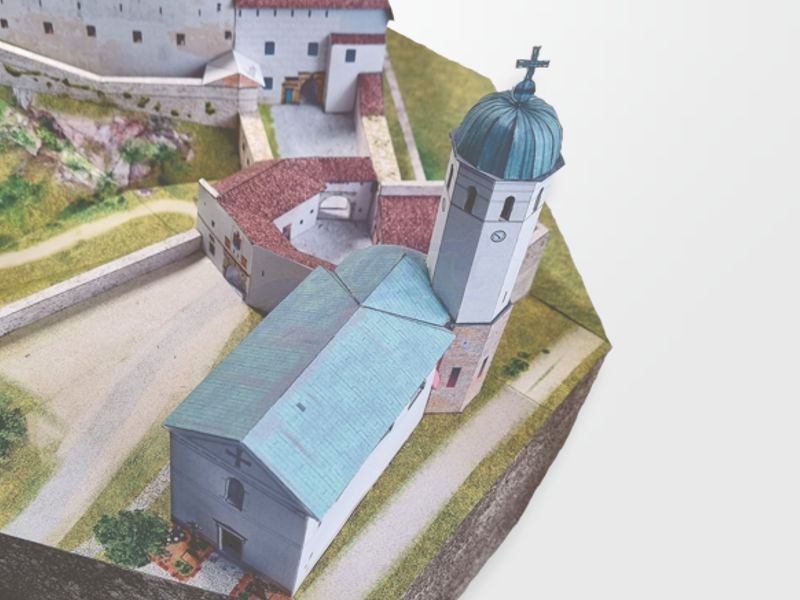
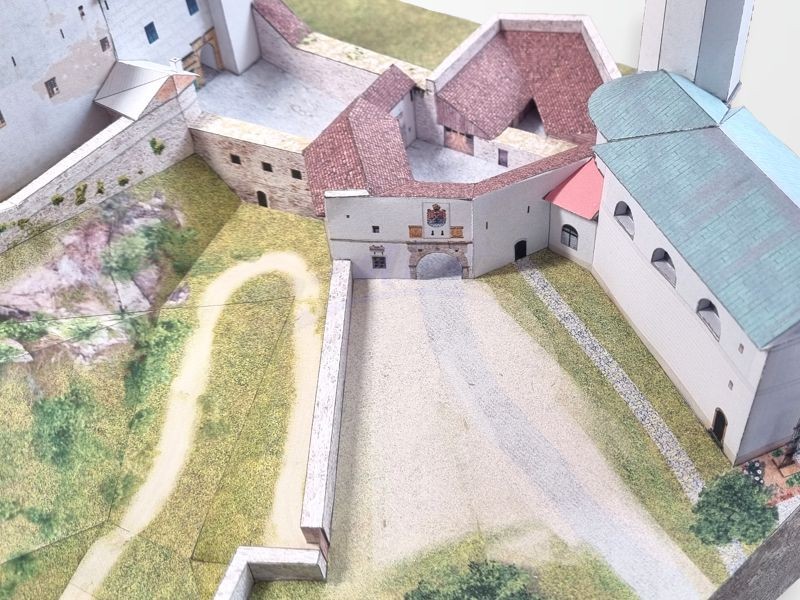
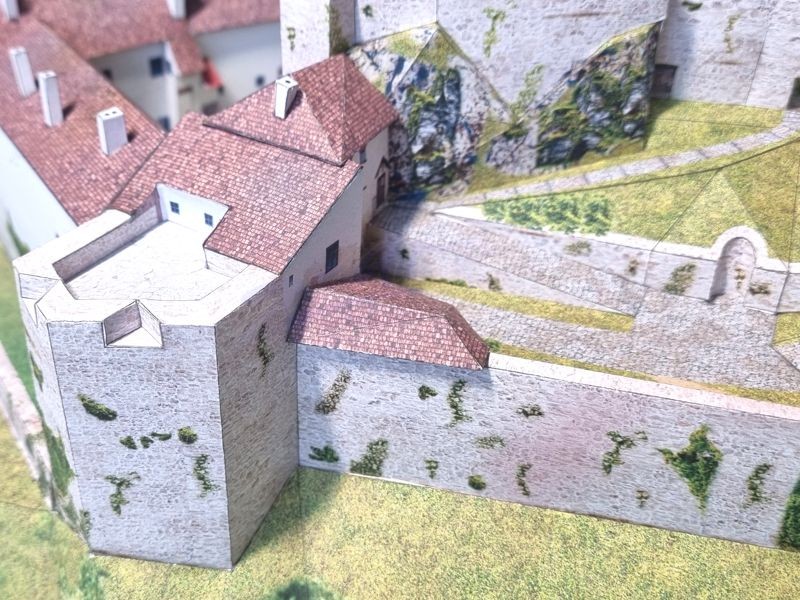
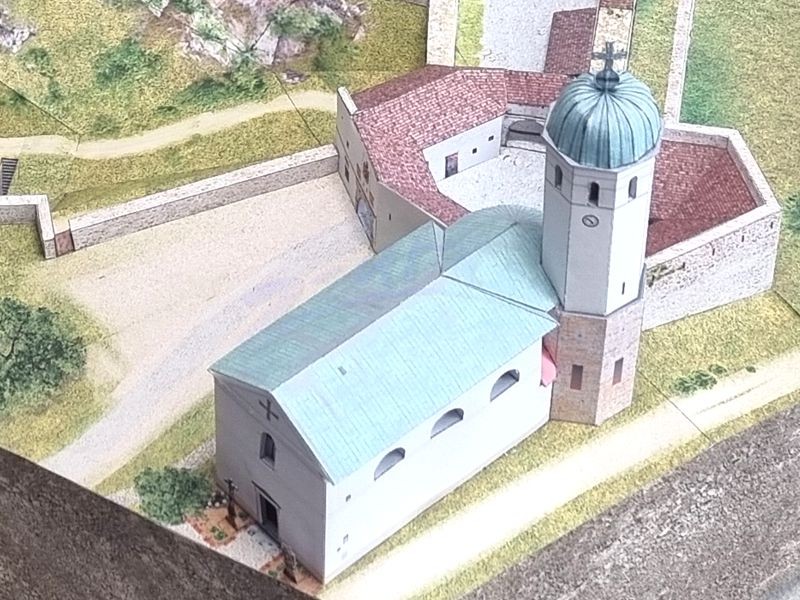
In 1576, Vavřinec Eder of Štiavnica became the owner of the castle. He had gained his fortune through mining of iron ore and precious metals and could afford to make significant investments in the castle. A testament to his efforts is the building of today’s 3rd gate, which features Renaissance stone rustication and is decorated with Renaissance sgraffito. At the same time, a massive polygonal cannon bastion, known as a remter, was built and connected by a wall to the third castle gate. Vavřinec also constructed a freestanding octagonal battery tower, which is partially preserved to this day as the lower section of the tower of St. Augustine’s Church. On the northern side, the castle was protected by new forward fortifications known as Kočičí hlava the Cat´s Head). Vavřinec bequeathed his estate to his daughter Anna Ederovna. She married Jan the Elder Kobylka of Kobylí, who had a solid Renaissance barbican built at the castle, featuring a massive gable wall with what is now the 1st gate.
During the Thirty Years’ War—in 1623—Kobylka was forced to sell the castle to Charles Habsburg, the younger brother of the then-ruling Ferdinand II. Charles did not purchase the castle for himself, but for the Order of the Teutonic Knights, of which he was Grand Master. The Order then owned the castle for another 300 years. Between 1628 and 1643, the castle was heavily fortified—it was expanded with three new bastions: Jiřský to the north, and Jánský and Vilémův to the south. Another bastion, called Klippel’s Bastion (today’s refreshment area in the first courtyard), was built to reinforce the existing barbican protecting the entrance to the castle. The fortifications were supplemented by a partially walled moat, outer palisades, and an underground passage connecting the castle to the newly built forward gun bastion known as Lichtenštejnka. This transformed the castle into a modern Baroque fortress, one of the largest in the country.
In 1643, the Swedish army—8,000 men armed with 82 cannons and led by General Lennart Torstenson—marched here. The castle garrison (several hundred men) resisted for three weeks before being forced to surrender. The Swedes remained here until 1650, after which the castle returned to the Order of Teutonic Knights, who began carrying out the most necessary repairs.
The newest part of the castle is the large brick building of the former seminary, which was built in the 1860s. After 10 years, the seminary was moved to Opava, and the building was leased to the Moravian-Silesian Forestry School, which operated there until 1896.
At the beginning of the 20th century, during the time when Eugene of Habsburg was Grand Master of the Order, the castle was modernized; water and electricity were installed, and 32 rooms were refurbished.
In 1939, Hitler abolished the male line of the Order of German Knights by decree and handed the castle over to the German Wehrmacht. The Wehrmacht established a prisoner-of-war camp there—French officers and Polish soldiers were imprisoned there until 1942. On May 9, 1945, a massive fire broke out at the castle; the fire raged for three days, and a large part of the castle burned down. Only the buildings in the 1st–3rd courtyards and the stables remained undamaged.
After the war, the castle became the property of the Czechoslovak state. The first repairs took place in the 1950s, when the polygonal gun tower known as the “remter”, the South Palace, and the building of the 6th Gate were roofed. In 1990, the tower was roofed.
Since 2003, the castle has been owned by the Moravian-Silesian Region and is managed by the Museum in Bruntál; most of the repairs to the castle have been carried out over the past 20 years. New roofs and windows were installed, and the building received a new exterior facade. The fortifications were repaired. A section of the underground passage was reconstructed and opened to the public.
Today, Sovinec is a place where history comes alive. You can explore its architecture or enjoy one of the many events held here. For more information about the castle, visit www.hrad-sovinec.cz or the castle’s social media pages.
Text: Michal Koutný and Taťána Polášková, translate: Simona Čechalová
You can order in our e-shop.
Back